A good serve can change the feeling of a whole volleyball game. It does not have to be flashy, and it does not have to be hit as hard as possible. What matters most is control, a clean toss, and the confidence to put the ball where you want it to go.

If your serve is inconsistent, the first thing to check is usually not your arm swing. Most serving problems start earlier than that, with the feet, the toss, or the way the player rushes through the motion. Slow the serve down for a few practices and you will often find the mistake much faster.

Start With A Stable Stance

Before thinking about power, get comfortable at the service line. Your feet should feel steady, with your weight balanced enough that you can step forward without falling into the ball. For most right-handed players, the left foot starts slightly ahead. Left-handed players usually do the opposite.

Do not stand so stiff that the serve feels mechanical. A little bend in the knees helps the whole body move together. The serve should feel like one smooth action, not a separate toss, step, and swing fighting each other.
Keep The Toss Simple

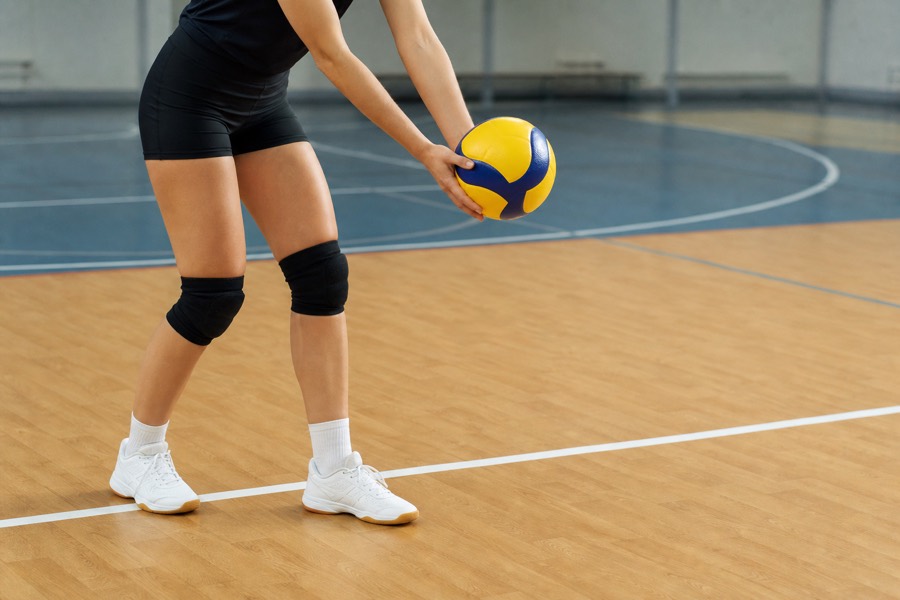
The toss is where many serves are won or lost. If the toss drifts too far forward, the player has to chase it. If it goes behind the hitting shoulder, the swing gets cramped. A useful target is to toss the ball just in front of the hitting shoulder, high enough to contact it with a full arm extension.

Practice the toss by itself. Stand at the line, toss the ball, and let it drop. It should land close to your front foot, not several steps away. This drill can feel boring, but it teaches the control that makes the actual serve much easier.

Aim Before You Swing

A strong serve is helpful, but a smart serve is often better. Instead of serving blindly into the middle of the court, pick a target before the whistle. You might aim deep to push a passer back, short to make the front row move, or toward the space between two players.

This is especially useful in recreational games, school volleyball, and club practices. Many points come from making the other side communicate under pressure. You do not need a perfect ace every time. A serve that forces a poor pass is already doing its job.
Build A Serving Routine

The best servers usually do the same small routine every time. They breathe, check the target, bounce or hold the ball the same way, then serve. That routine keeps the mind from wandering when the score is close.

Try not to change everything after one missed serve. Instead, make one correction at a time. Was the toss too low? Did the contact happen late? Did the feet rush forward? Small adjustments are easier to trust than starting over with a completely new motion.

Serving Drills That Help

One simple drill is to divide the opposite court into zones and serve ten balls to one zone before moving to the next. Another good drill is pressure serving, where a player has to make two or three serves in a row before leaving the line. This adds a little match feeling without needing a full game.

For newer players, start closer to the net and move back as the serve becomes more reliable. For experienced players, add targets, score goals, or consequences that keep the drill honest. The point is not just to get the ball over. The point is to serve with purpose.

Good serving comes from repeatable habits. Get the stance comfortable, make the toss predictable, choose a target, and keep practicing under a little pressure. Do those things often enough and your serve will become a real weapon, not just a way to start the rally.
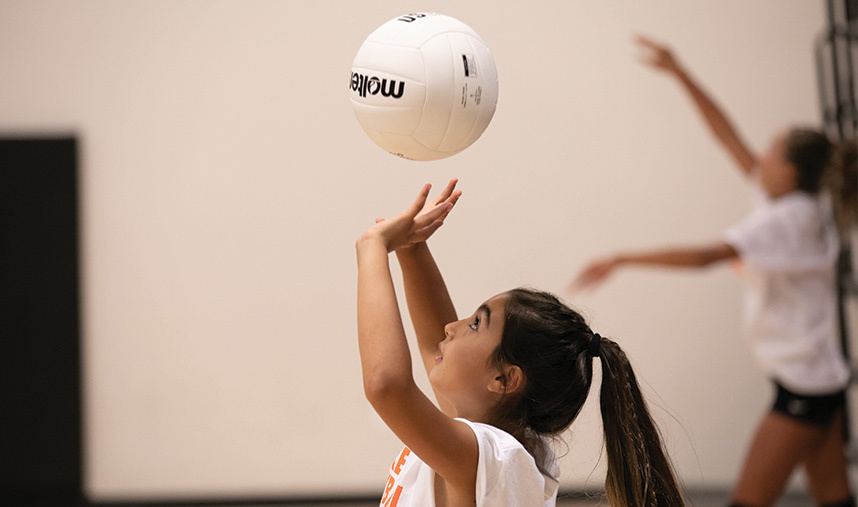
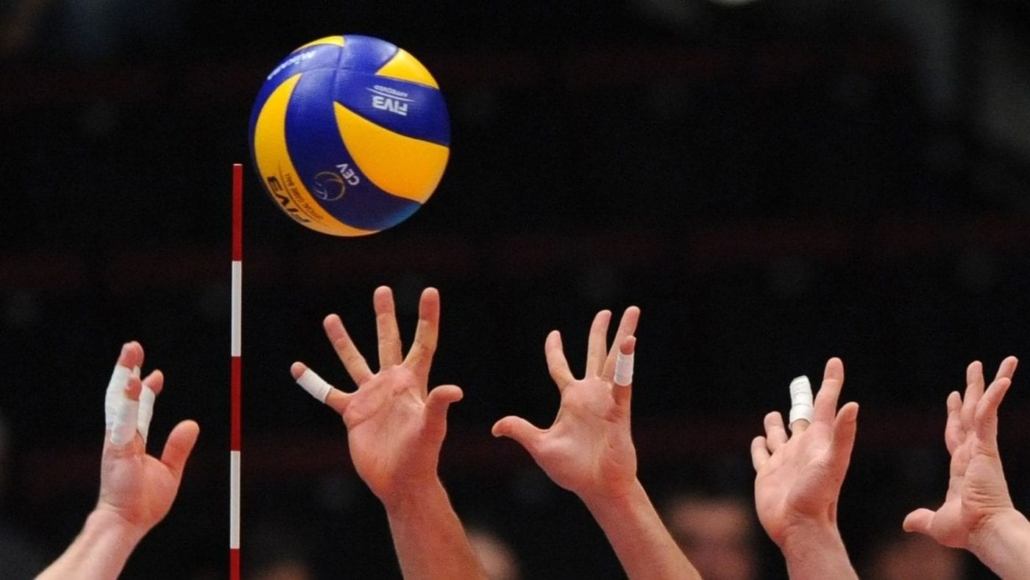
Setters have a very great responsibility in order to lead the team on the floor. As most of us know, the skills of a setter can make or break the team in volleyball. The setter’s capability to set consistent, well-placed balls into the hitters could be the distinction between winning and losing. Setters must be quick, prepared to move to any ball which comes along their way, and always ready to make fast decisions on where to send the ball as well as when. Look into the following volleyball tips to improve your setting tactics and take your game one stage further.

Regardless of how your body and hands are positioned, skills for setting must be consistent. That is, your volleyball hand technique for playing the ball needs to be the same each time you try to set.

Learning the Volleyball Set - Tips For Getting The Perfect Volleyball Set

Learning the Volleyball Set and Right Mechanics

Studying hand position for setting:

  • Having your hands down facing you, place all 10 fingertips together (thumbs in contact with each other, index fingers in contact with each other, etc) having all the fingers spread wide.
  • Raise both hands up over your head having your fingers still touching.
  • Pull your elbows off to the sides.
  • Pull your hands aside simply far enough to ensure that the ball fits in between them.

Contacting the ball

Contacting the ball - Tips For Getting The Perfect Volleyball Set

The fingers are the sole section of your hand which touches the ball, not the palms. The thumbs, index fingers, as well as middle fingers are what you use along with your wrists to receive and push the ball.

The little fingers and ring finger simply provide you additional control whenever setting.

Skill progressions for creating clean hands…

Catch

Throw the ball to yourself, then simply catch the ball using your hands in the proper position.

Catch and push

Catch the ball in the right position. Following a pause, go on via a setting motion.

Shorter and shorter pauses

Focus on catching the ball using proper hand positions and slowly make the pauses shorter. While you are setting, concentrate on taking spin off the ball.

Skills for Getting in Position to Volleyball Set

Getting in Position to Volleyball Set - Tips For Getting The Perfect Volleyball Set

The very best setter moves in a direct line into the ball and perform the set effectively to the hitter.

Setters must explode to the ball; come early having the hands up.

Proper skill footwork for transferring coming from the target position.

  • left-right-left
    Whenever you’re at the target awaiting the pass, get your bodyweight in your right foot prepared to take a step along with your left on the way to the passed ball.
  • big right, then left
    In case you’ve got accurate passers, a setter could easily get into position faster by taking a huge right step into the spot the ball is being handed. Following that huge step, pivot squaring up to the left antennae.

Even if you’re slow, you can still build great footwork to reach the ball quicker compared to other setters with poor tactic.

Skills for Pursuing the Ball

Pursuing The Ball - Tips For Getting The Perfect Volleyball Set

Setters must focus on reaching the ball first prior to emphasizing volleyball setting technique.

In case you can’t run and reach the ball efficiently, setting the ball will be a lot more challenging. A standard mistake beginning setter’s make is running after the ball having their hands up in the air.

Though you must get your hands up early prepared to volleyball set, you need to use your arms first to move to the ball.

Skills for Squaring Up

The most effective way to develop consistent sets is facing the target all the time. A great rule of thumb is to always face the left antennae whenever setting.

Utilize both your legs and arms to guide the ball and continue using both hands directed towards the target.