A good serve can change the feeling of a whole volleyball game. It does not have to be flashy, and it does not have to be hit as hard as possible. What matters most is control, a clean toss, and the confidence to put the ball where you want it to go.
If your serve is inconsistent, the first thing to check is usually not your arm swing. Most serving problems start earlier than that, with the feet, the toss, or the way the player rushes through the motion. Slow the serve down for a few practices and you will often find the mistake much faster.

Start With A Stable Stance
Before thinking about power, get comfortable at the service line. Your feet should feel steady, with your weight balanced enough that you can step forward without falling into the ball. For most right-handed players, the left foot starts slightly ahead. Left-handed players usually do the opposite.
Do not stand so stiff that the serve feels mechanical. A little bend in the knees helps the whole body move together. The serve should feel like one smooth action, not a separate toss, step, and swing fighting each other.
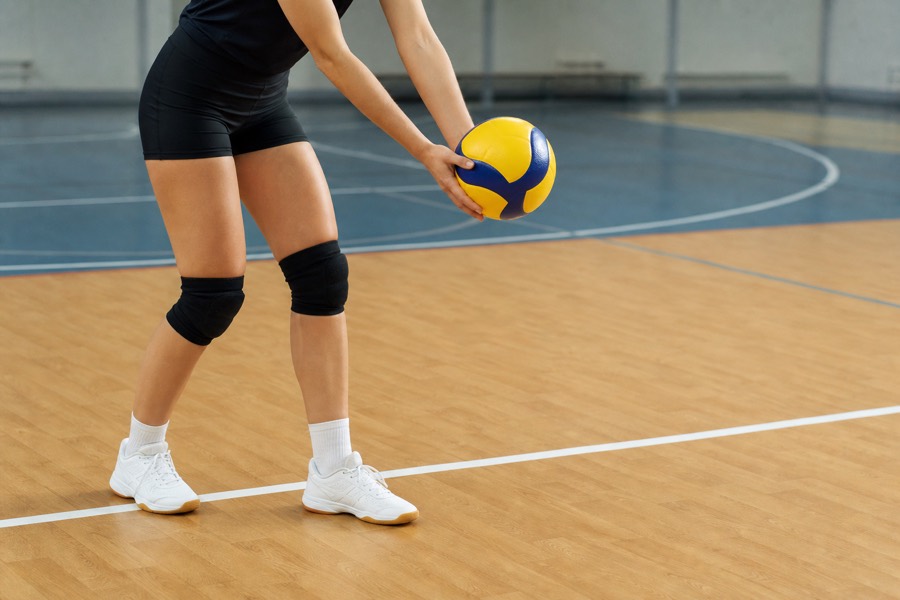
Keep The Toss Simple
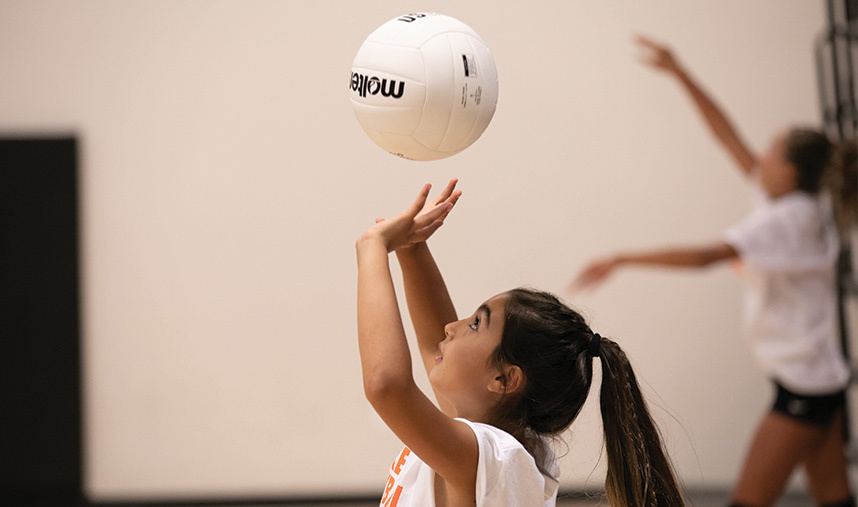
The toss is where many serves are won or lost. If the toss drifts too far forward, the player has to chase it. If it goes behind the hitting shoulder, the swing gets cramped. A useful target is to toss the ball just in front of the hitting shoulder, high enough to contact it with a full arm extension.
Practice the toss by itself. Stand at the line, toss the ball, and let it drop. It should land close to your front foot, not several steps away. This drill can feel boring, but it teaches the control that makes the actual serve much easier.
Aim Before You Swing
A strong serve is helpful, but a smart serve is often better. Instead of serving blindly into the middle of the court, pick a target before the whistle. You might aim deep to push a passer back, short to make the front row move, or toward the space between two players.
This is especially useful in recreational games, school volleyball, and club practices. Many points come from making the other side communicate under pressure. You do not need a perfect ace every time. A serve that forces a poor pass is already doing its job.

Build A Serving Routine
The best servers usually do the same small routine every time. They breathe, check the target, bounce or hold the ball the same way, then serve. That routine keeps the mind from wandering when the score is close.
Try not to change everything after one missed serve. Instead, make one correction at a time. Was the toss too low? Did the contact happen late? Did the feet rush forward? Small adjustments are easier to trust than starting over with a completely new motion.
Serving Drills That Help
One simple drill is to divide the opposite court into zones and serve ten balls to one zone before moving to the next. Another good drill is pressure serving, where a player has to make two or three serves in a row before leaving the line. This adds a little match feeling without needing a full game.
For newer players, start closer to the net and move back as the serve becomes more reliable. For experienced players, add targets, score goals, or consequences that keep the drill honest. The point is not just to get the ball over. The point is to serve with purpose.
Good serving comes from repeatable habits. Get the stance comfortable, make the toss predictable, choose a target, and keep practicing under a little pressure. Do those things often enough and your serve will become a real weapon, not just a way to start the rally.